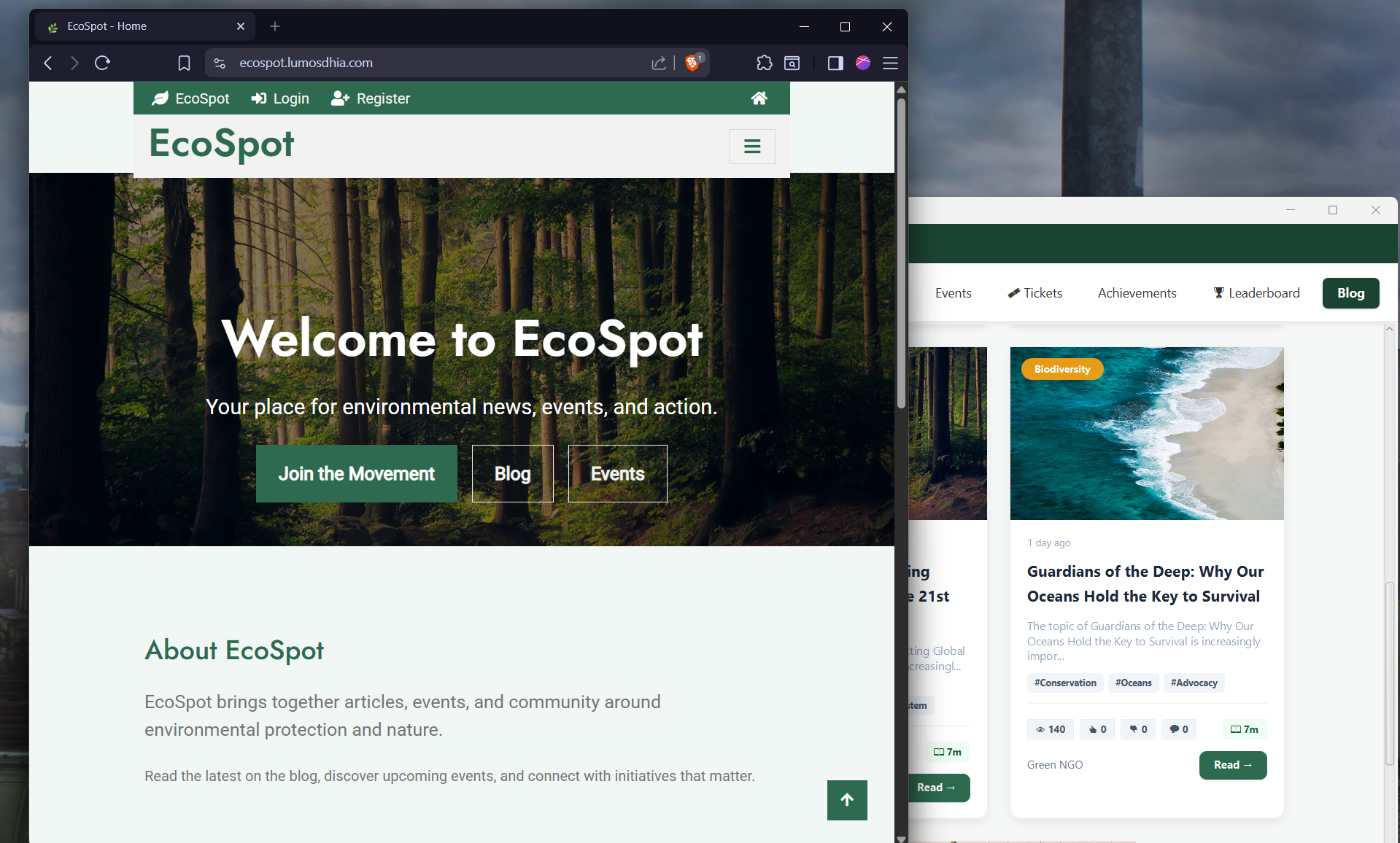
EcoSpot Desktop: A Collaborative Ecological Platform
A premium JavaFX desktop application featuring asynchronous navigation, AI-driven insights, and a seamless management experience.
Today marks the successful conclusion of our third major project during this first year of engineering at ESPRIT. Building on the foundations of our web platform, we transitioned to a native desktop environment to deliver a more powerful and responsive management suite. I am incredibly proud of how this ecosystem has evolved, and this article documents the technical journey of bringing EcoSpot Desktop to life using Java and JavaFX.
Project Overview
EcoSpot Desktop was engineered to bridge the gap between high-performance data management and a premium user experience. While the web version prioritized broad accessibility, the desktop client focuses on:
- Asynchronous Fluidity: Leveraging multi-threading to ensure the UI never freezes during heavy AI or network operations.
- AI-Powered Insights: Direct integration with LLMs for SEO and biometric authentication for security.
- Native Performance: A rich, responsive interface built with JavaFX and styled with modern CSS.
Technologies & Ecosystem
- Core: Java 17, JDBC for high-performance database connectivity.
- UI Framework: JavaFX, SceneBuilder, and custom CSS for a "glassmorphism" aesthetic.
- AI Microservices:
- OpenRouter API: Powering our AI SEO and title generation.
- Python Flask: A dedicated microservice for biometric Face Recognition.
- External APIs:
- PurgoMalum: Automated profanity filtering for community safety.
- DiceBear: Procedural avatar generation for unique user identities.
- Unsplash: Real-time high-resolution media fetching.


My Contributions
1. Asynchronous UI Architecture
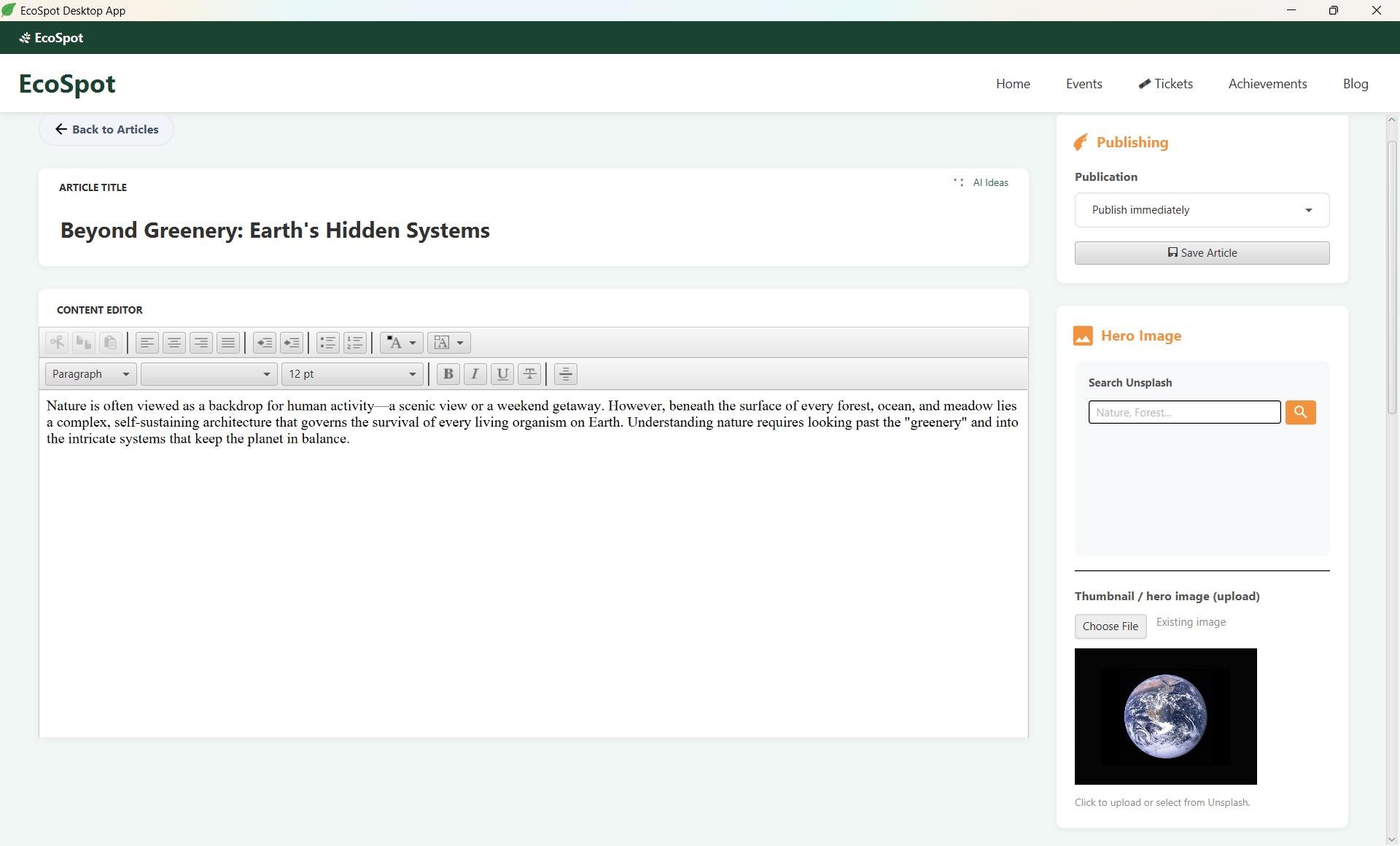
To maintain a "premium" feel, I developed the AsyncNavigator system. This utility ensures that every scene transition and network request happens in the background, showing a polished loading overlay while the next module initializes. This prevents the "Application Not Responding" state common in heavy desktop apps.
2. Intelligent Blog Engine
I ported and expanded our multi-lingual blog system to the desktop:
- AI SEO Assistant: Integrated OpenRouter to analyze article content and generate optimized metadata and creative titles automatically.
- Safety First: Implemented a real-time integration with PurgoMalum to filter toxic content from comments before they even reach our database.
3. Gamification & Point System (New)
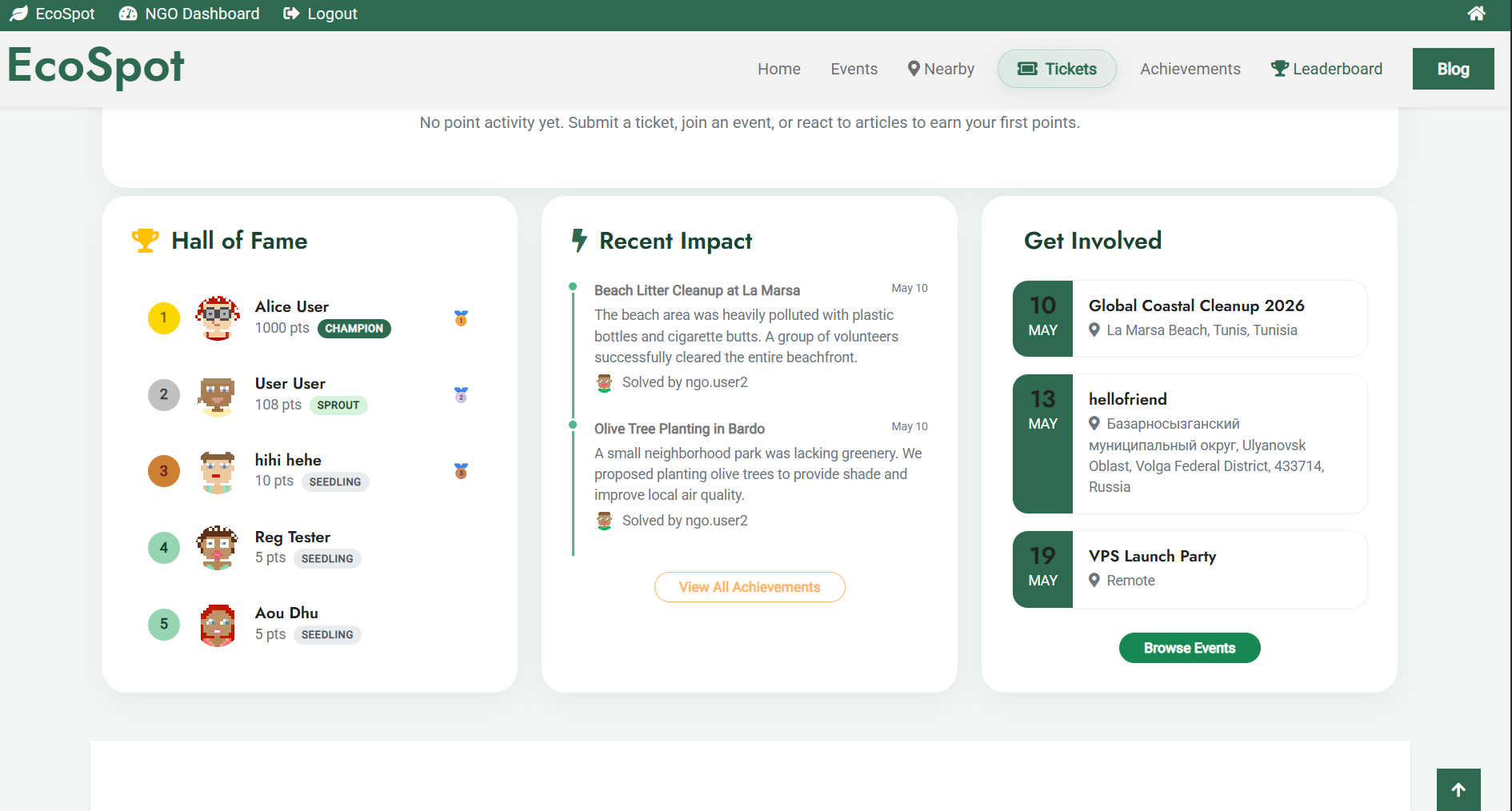
To encourage ecological engagement, we introduced a robust Gamification Module. This system tracks user contributions and awards points based on their impact:
- Tiered Ranking: Users evolve through tiers from Seedling to Guardian (at 2500+ points).
- Dynamic Rewards: Points are awarded for approved tickets (+10), event streaks, and meaningful article interactions.
- Leaderboard: A real-time global ranking system that drives healthy competition among environmental activists.
Deployment & Cloud Architecture
One of the most significant milestones was moving from a local environment to a fully deployed production ecosystem. We hosted the entire platform on a high-performance VPS, ensuring that the Desktop, Web, and AI components are seamlessly connected.
VPS Architecture & Connectivity
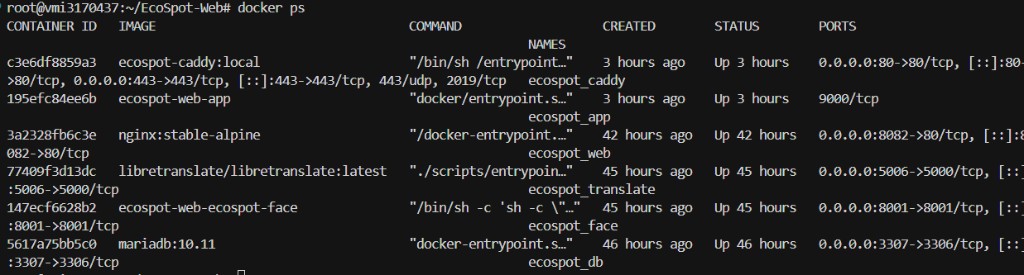
Everything in the EcoSpot ecosystem is centralized on our VPS (public-ip), using a combination of Docker and standalone microservices:
Secure Networking with Cloudflare
To protect our infrastructure, we utilized a Cloudflare Tunnel. This allowed us to:
- Hide Sensitive Ports: We don't have to open ports like
3307or8001directly to the public internet firewall. - Secure Communication: The tunnel creates a persistent, encrypted bridge between our VPS and the Cloudflare edge, routing traffic securely to our internal services.
- SSL/TLS Termination: Cloudflare handles the encryption, ensuring that all data—from biometric face data to ecological reports—is transmitted securely.
Cross-Platform Integration: QR Code Bridge
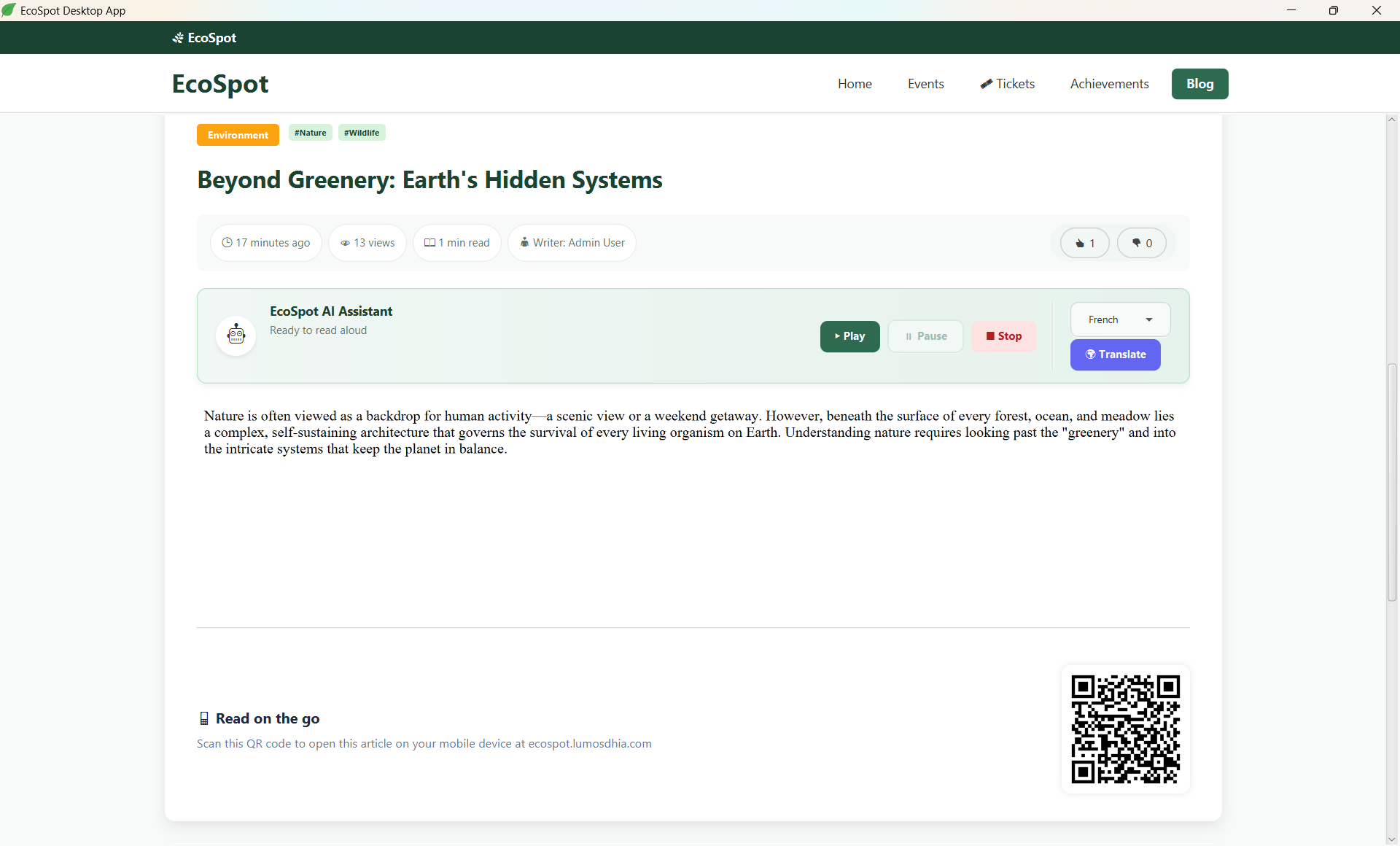
A key proof-of-concept for our deployment was the QR Code article reader. Every article published from the desktop client includes an embedded QR code that deep-links directly to the live article on the web dashboard — showcasing the seamless connection between the JavaFX client and the cloud-hosted web platform.
Conclusion
The journey from a web-based Symfony project to a complex, multi-service JavaFX ecosystem has been an incredible learning experience. Implementing advanced patterns like asynchronous navigation, AI-driven content moderation, and a tiered gamification system has taught us the importance of scalability and security. Deploying this entire stack to a VPS via Cloudflare Tunnels was the final "prestige" step, transforming EcoSpot from a school project into a production-ready ecological hub.